



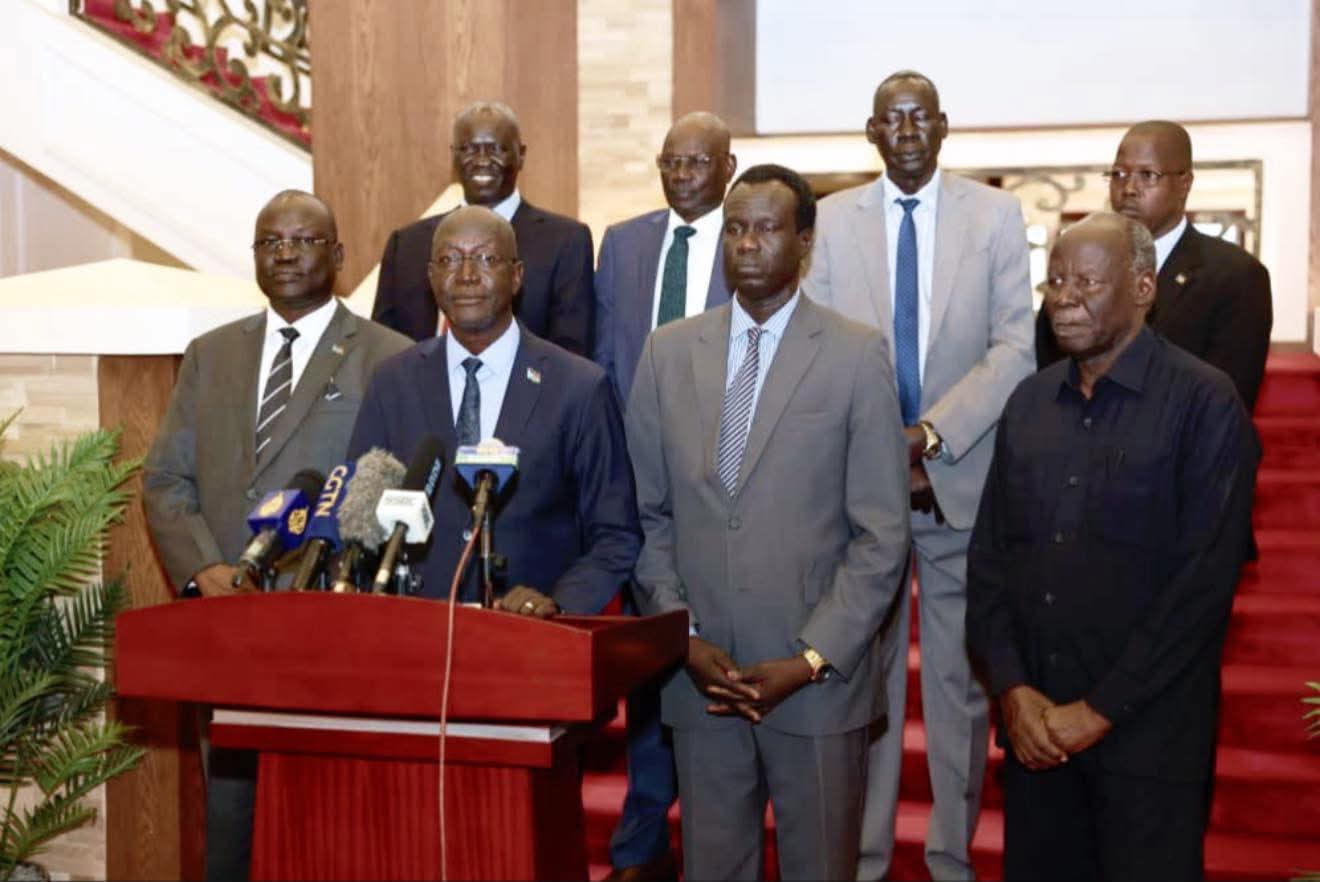

Parties to South Sudan’s 2018 peace agreement have announced that the country’s transitional period will not be extended beyond the current agreed timeline, a move aimed at safeguarding the December 2026 general elections.
At a press briefing held at the State House in Juba on Friday, Presidential Affairs Minister Africano Mande Gedima read out a joint statement from representatives of the peace parties, affirming that no further extension of the transitional arrangements under the Revitalized Agreement on the Resolution of the Conflict in South Sudan (R-ARCSS) will be granted.
The decision follows recent negotiations between President Salva Kiir and peace deal signatories, who also agreed to postpone the population census and the drafting of a permanent constitution requirements originally set under the peace agreement until after the elections next year.
To facilitate the electoral timeline, the presidency has approved amendments to the peace agreement and instructed the establishment of a committee to initiate the required constitutional changes ahead of the December polls.
In addition to the amendments, the presidency directed the immediate completion of key transitional security arrangements, particularly those under Chapter 2 of the peace deal, and authorised the pausing of other provisions that cannot be finalised before elections.
Representatives from the Revitalised Transitional Government of National Unity (RTGoNU) and major signatory groups including the SPLM, SPLM-IO faction under Stephen Par Kuol, the South Sudan Opposition Alliance, Former Detainees, and Other Political Parties were present during the announcement.
The presidency has also tasked the Ministry of Finance and Planning with releasing funds to support election preparations, signalling a renewed commitment to meeting the agreed electoral timetable.
This declaration comes amid growing calls from regional and international partners for South Sudan’s leaders to honour their previous commitment that the extended transitional period will be final and that credible elections should be held by December 2026.
Independent and regional observers have pointed out that past extensions have often been justified by delays in implementing critical peace agreement benchmarks.
